Market Research Methods for Beginners sets the stage for this enthralling narrative, offering readers a glimpse into a story that is rich in detail with casual formal language style and brimming with originality from the outset.
In this guide, we will explore the essential aspects of market research methods, providing beginners with the knowledge and tools needed to navigate this complex field with confidence.
Introduction to Market Research Methods
Market research is a crucial process for beginners looking to understand their target audience, competition, and industry trends. It involves gathering and analyzing data to make informed business decisions.
Primary Objectives of Market Research
- Identifying target market segments
- Evaluating customer needs and preferences
- Assessing market trends and competition
Benefits of Using Market Research Methods
- Minimizing risks by making data-driven decisions
- Understanding customer behavior for effective marketing strategies
- Improving product development based on consumer feedback
- Gaining a competitive edge by staying ahead of industry trends
Types of Market Research
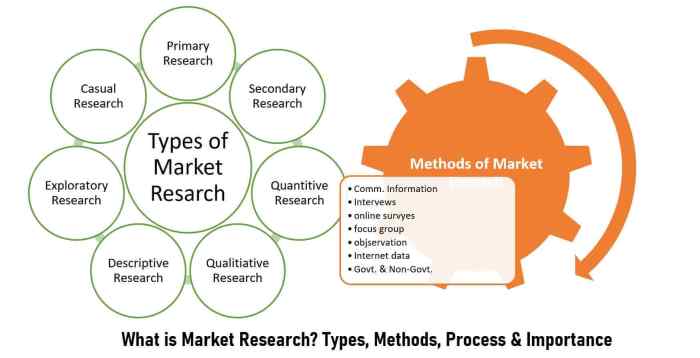
Market research can be broadly categorized into two main types: primary research and secondary research. Primary research involves collecting data directly from the source through methods like surveys, interviews, and focus groups. On the other hand, secondary research involves analyzing existing data sources such as reports, articles, and databases.
Qualitative vs. Quantitative Research
Qualitative research focuses on understanding the underlying motivations, opinions, and reasons behind consumer behavior. This type of research is exploratory in nature and often involves open-ended questions and in-depth interviews. On the other hand, quantitative research involves collecting numerical data and analyzing it statistically to draw conclusions. This type of research is more structured and aims to quantify the data for statistical analysis.
Exploratory, Descriptive, and Causal Research
Exploratory Research
This type of research is conducted to explore a problem or phenomenon, often when little is known about the topic. It helps in generating insights and identifying research questions for further study.
Descriptive Research
Descriptive research aims to describe the characteristics of a population or phenomenon. It focuses on answering questions like who, what, when, and where, providing a snapshot of the current situation.
Causal Research
Causal research is used to establish a cause-and-effect relationship between variables. This type of research helps in understanding the impact of one variable on another and is often conducted through experiments or longitudinal studies.
Implementing Market Research
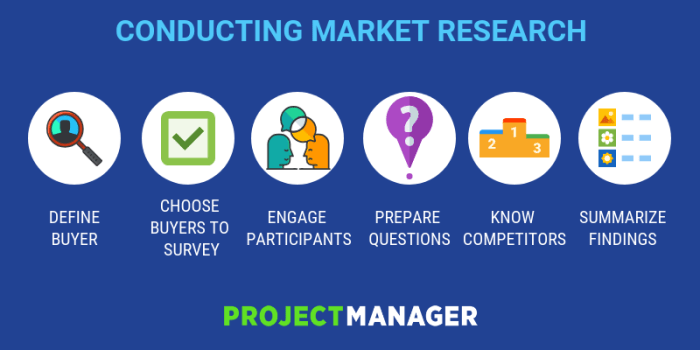
Once you have a good understanding of market research methods and types, it’s time to put that knowledge into action. Implementing market research involves designing a plan, conducting surveys and interviews, and collecting data effectively.
Designing a Market Research Plan
Before you start any market research activities, it’s essential to create a solid plan. This plan should Artikel your research objectives, target audience, methodology, timeline, and budget. By having a clear roadmap, you can ensure that your research efforts are focused and effective.
Conducting Surveys and Interviews
Surveys and interviews are common methods used to gather data from target customers. When conducting surveys, make sure to design clear and concise questions, choose the right distribution channels, and analyze the results accurately. For interviews, prepare a list of questions, select appropriate interviewees, and actively listen to their responses to gather valuable insights.
Collecting and Analyzing Data
After gathering data through surveys, interviews, or other methods, it’s crucial to organize and analyze the information effectively. Use tools like spreadsheets or data analysis software to process the data, identify patterns or trends, and draw meaningful conclusions. By analyzing the data accurately, you can make informed decisions and improve your marketing strategies.
Tools and Techniques
Market researchers use a variety of tools and techniques to collect and analyze data effectively. These tools help in obtaining valuable insights into consumer behavior, market trends, and competitive landscape.
Popular Tools for Data Collection and Analysis
- Surveys: Surveys are a common tool used to gather information from a large sample of the target population. They can be conducted online, over the phone, or in person.
- Interviews: In-depth interviews provide qualitative data by allowing researchers to have detailed conversations with participants. This method helps in exploring underlying motivations and preferences.
- Observation: Observing consumer behavior in real-life settings can offer valuable insights into how people interact with products or services.
- Data Analytics Software: Tools like SPSS, SAS, or Microsoft Excel are used to analyze and interpret data collected from various sources.
Using SWOT Analysis in Market Research
SWOT analysis is a strategic planning tool that helps businesses identify their Strengths, Weaknesses, Opportunities, and Threats. In market research, SWOT analysis can be used to assess the internal and external factors that may impact a company’s performance in the market. By identifying these factors, businesses can develop strategies to capitalize on strengths, address weaknesses, leverage opportunities, and mitigate threats.
Application of Focus Groups in Understanding Consumer Behavior
Focus groups involve gathering a small group of participants to discuss their opinions, attitudes, and experiences related to a product or service. This qualitative research method helps in understanding consumer preferences, perceptions, and behaviors in a more interactive and in-depth manner. By facilitating group discussions, researchers can uncover valuable insights that may not be possible through other data collection methods.
Market Volatility and Research
Market volatility refers to the rapid and unpredictable changes in the prices of assets or securities in the market. This can have a significant impact on market research outcomes, as the data collected during volatile periods may not accurately reflect the true state of the market.
Adapting Research Methods to Volatile Markets
In order to adapt research methods to volatile markets, researchers can consider the following strategies:
- Increasing the frequency of data collection to capture rapid changes in market conditions.
- Utilizing more qualitative research methods, such as interviews and focus groups, to gain deeper insights into consumer behavior during turbulent times.
- Collaborating with industry experts to gain a better understanding of market trends and potential impacts on research findings.
- Using scenario planning to anticipate potential market outcomes and adjust research strategies accordingly.
Examples of Market Volatility Influencing Research Findings
- During the 2008 financial crisis, market research findings related to consumer spending habits were significantly impacted, as individuals became more cautious with their finances.
- The COVID-19 pandemic led to a shift in consumer preferences and behaviors, affecting market research outcomes across various industries.
- The sudden rise and fall of cryptocurrency prices have influenced market research on investor sentiment and adoption rates.
As we conclude this exploration of market research methods for beginners, it becomes evident that with the right approach and understanding, anyone can harness the power of data to make informed decisions and drive business growth.
Frequently Asked Questions
What is the importance of market research for beginners?
Market research helps beginners understand their target audience, competition, and market trends to make informed business decisions.
What are the primary objectives of market research?
The primary objectives include identifying market opportunities, understanding consumer preferences, and evaluating market performance.
How can beginners design an effective market research plan?
Beginners can design a plan by defining objectives, choosing research methods, collecting data, and analyzing findings to draw actionable insights.