Market Research for Product Development sets the stage for this enthralling narrative, offering readers a glimpse into a story that is rich in detail with casual formal language style and brimming with originality from the outset.
Exploring the significance of market research in driving product development decisions and the crucial role it plays in identifying trends and opportunities for innovation.
Market Research for Product Development
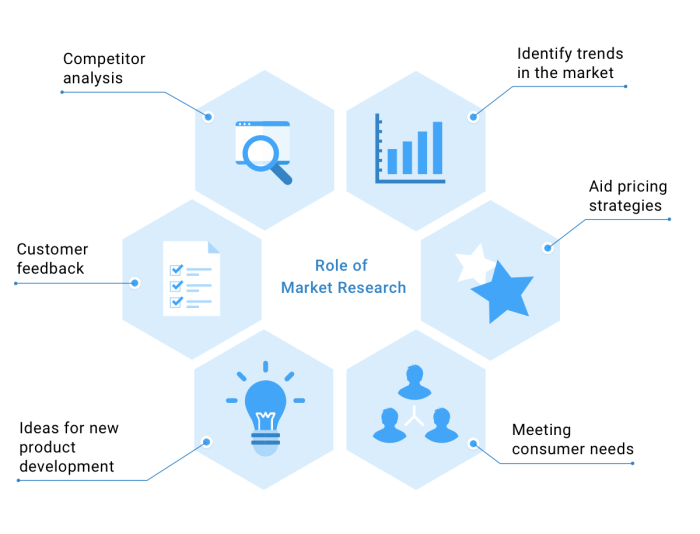
Market research plays a crucial role in shaping product development strategies by providing valuable insights into consumer preferences, market trends, and competitor analysis. It helps companies understand the needs and desires of their target audience, allowing them to tailor their products to meet those requirements effectively.
Importance of Market Research
Market research can influence product features and design in various ways. For example, by conducting surveys and focus groups, companies can gather feedback on existing products or prototypes to identify areas for improvement. This feedback can help in refining product features, enhancing usability, and ensuring that the final product meets consumer expectations.
Role of Consumer Feedback
Consumer feedback is instrumental in guiding product development decisions. By listening to customer suggestions, complaints, and preferences, companies can make informed choices about product enhancements, new features, or even entirely new product lines. This customer-centric approach ensures that the final product resonates with the target market and drives customer satisfaction.
Identifying Market Trends and Opportunities
Market research helps in identifying market trends and opportunities for innovation by analyzing consumer behavior, competitor strategies, and emerging technologies. By staying ahead of market dynamics, companies can proactively develop products that capitalize on current trends and anticipate future demand. This proactive approach can lead to a competitive edge and increased market share.
Market Analysis Techniques
Market analysis plays a crucial role in shaping the success of product development. By employing the right techniques, businesses can gain valuable insights into consumer behavior, market trends, and competitor strategies. Let’s delve into some key market analysis methods:
Comparing Qualitative and Quantitative Analysis
When it comes to market analysis, businesses can choose between qualitative and quantitative methods. Qualitative analysis focuses on gathering non-numerical data through methods like interviews, focus groups, or observations. This approach provides in-depth insights into consumer preferences, motivations, and attitudes. On the other hand, quantitative analysis involves collecting numerical data through surveys, questionnaires, or data mining. This method offers statistical insights into market trends, customer demographics, and preferences.
Both qualitative and quantitative analysis methods have their strengths and weaknesses, and a combination of both can provide a comprehensive understanding of the market landscape.
Conducting Competitor Analysis
Competitor analysis is essential for product development as it helps businesses identify their strengths, weaknesses, opportunities, and threats in comparison to competitors. The process involves analyzing competitors’ products, pricing strategies, distribution channels, and marketing tactics. By understanding competitor positioning and market share, businesses can identify gaps in the market and develop strategies to differentiate their products effectively.
Designing Market Segmentation Strategy
Based on research findings, businesses can design a market segmentation strategy to target specific customer segments effectively. Market segmentation involves dividing the market into distinct groups based on demographics, psychographics, behavior, or needs. By tailoring products and marketing messages to different segments, businesses can enhance customer engagement and drive sales. For example, a skincare company may segment its market based on age groups and develop products targeted at specific skincare needs of each segment.
Utilizing SWOT Analysis
SWOT analysis is a valuable tool for assessing market conditions and identifying key factors that can impact product development. By evaluating strengths, weaknesses, opportunities, and threats, businesses can gain a comprehensive understanding of their internal capabilities and external market dynamics. For instance, a technology company may use SWOT analysis to identify its technological strengths, potential market opportunities for expansion, internal operational weaknesses, and external threats like new competitors or regulatory changes.
Market Research Tools and Technologies
When it comes to market research for product development, utilizing the latest tools and technologies is essential for gaining valuable insights and staying ahead of the competition.
One of the key benefits of using data analytics in market research is the ability to analyze large volumes of data efficiently and effectively. This helps in identifying trends, patterns, and consumer behaviors that can inform product innovation strategies.
Essential Market Research Software
- Google Analytics: A powerful tool for tracking website traffic, user behavior, and conversion rates.
- Salesforce: Helps in managing customer relationships, tracking sales, and analyzing customer data.
- SurveyMonkey: Ideal for creating and distributing surveys to gather feedback from customers.
- Tableau: Enables the creation of interactive data visualizations for in-depth analysis.
Social Media Listening Tools for Market Research
Social media listening tools play a crucial role in market research by monitoring conversations, mentions, and sentiment around a brand or product on various social media platforms.
Market Volatility and Product Development
Market volatility can have a significant impact on product development timelines and strategies. Sudden shifts in market conditions, such as changes in consumer preferences, economic instability, or disruptive technologies, can disrupt the planned trajectory of a product development project. This can lead to delays, increased costs, and even failure to meet customer demands.
Adapting Product Development Plans
Market volatility requires agile and flexible product development strategies to adapt to changing circumstances. Some strategies for adapting product development plans in response to sudden market changes include:
- Conducting frequent market research to stay updated on consumer trends and preferences.
- Implementing rapid prototyping and testing to quickly iterate on product designs based on market feedback.
- Establishing cross-functional teams that can quickly respond to market changes and make necessary adjustments to the product development process.
- Collaborating closely with suppliers and partners to ensure supply chain resilience and flexibility in sourcing materials.
Continuous Market Monitoring
Continuous market monitoring is essential for mitigating risks associated with market volatility. By closely tracking market trends, competitor activities, and consumer behavior, companies can proactively identify potential challenges and opportunities. This allows for timely adjustments to product development plans and strategies to align with market demands.
Successful Product Launches in Uncertain Markets
Despite market volatility, some companies have successfully launched products during periods of uncertainty by:
- Targeting niche markets with specific needs and preferences that are less susceptible to market fluctuations.
- Leveraging digital marketing and social media to reach and engage with target audiences effectively.
- Offering innovative solutions that address emerging market needs and challenges.
- Implementing lean product development methodologies to quickly bring products to market and iterate based on customer feedback.
In conclusion, Market Research for Product Development proves to be a cornerstone in creating successful products, providing invaluable insights and guidance throughout the development process. Dive into the world of market research to unlock the potential for product innovation and growth.
FAQ
How does market research influence product design?
Market research helps in understanding consumer preferences, buying behavior, and market trends, which directly impact product design decisions.
What are some key benefits of using data analytics in market research?
Data analytics can provide valuable insights into consumer behavior, market trends, and competitive analysis, enabling informed product development strategies.
How can social media listening tools benefit market research?
Social media listening tools allow businesses to gather real-time feedback, monitor brand sentiment, and track consumer opinions, aiding in market research efforts.