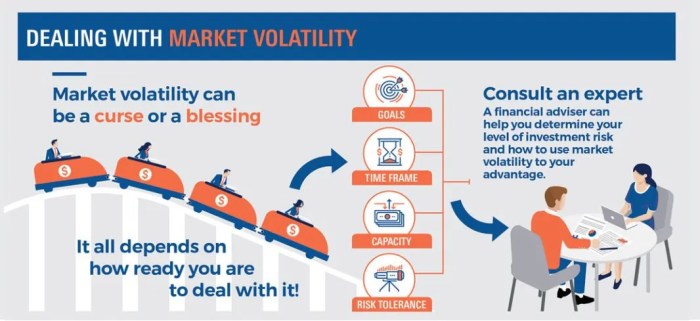
With Strategies for Dealing with Market Volatility at the forefront, this paragraph opens a window to an amazing start and intrigue, inviting readers to embark on a storytelling journey filled with unexpected twists and insights. Dive into the world of market volatility and discover how to navigate its challenges with confidence and knowledge.
Explore the impact of market volatility on investments, effective strategies for managing it, risk management techniques, and the importance of market research and analysis in making informed decisions.
Understanding Market Volatility
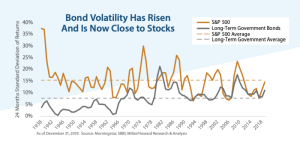
Market volatility refers to the rate at which the price of a security or market index fluctuates. It is a measure of the uncertainty or risk associated with the price changes of an asset over a specific period. Market volatility can have a significant impact on investments, affecting the value of portfolios and investor confidence.
Causes of Market Volatility
Market volatility can be caused by various factors, including:
- Economic Indicators: Changes in economic data such as GDP growth, inflation rates, and unemployment figures can trigger market volatility.
- Geopolitical Events: Political instability, wars, trade disputes, and natural disasters can create uncertainty in the markets.
- Corporate Earnings: Quarterly earnings reports and guidance from companies can influence investor sentiment and lead to market volatility.
- Interest Rates: Changes in interest rates set by central banks can impact borrowing costs, consumer spending, and overall market stability.
Historical Events Leading to Significant Market Volatility
- Black Monday (1987): On October 19, 1987, global stock markets experienced a sharp decline, with the Dow Jones Industrial Average dropping by over 22% in a single day.
- Dot-Com Bubble Burst (2000): The burst of the dot-com bubble in the early 2000s led to a significant market downturn, especially in the technology sector.
- Global Financial Crisis (2008): The collapse of major financial institutions and the housing market crash in 2008 caused widespread market turmoil and recession.
Strategies for Managing Market Volatility
Diversification, dollar-cost averaging, and staying invested for the long term are effective strategies for managing market volatility.
Diversification as a Strategy
Diversification involves spreading investments across different asset classes to reduce risk. By not putting all your eggs in one basket, you can cushion the impact of volatility in any single investment.
Dollar-Cost Averaging
Dollar-cost averaging is a technique where you invest a fixed amount of money at regular intervals, regardless of market conditions. This helps to reduce the impact of market fluctuations by spreading out your purchase price over time.
- By buying more shares when prices are low and fewer shares when prices are high, dollar-cost averaging can help you avoid making emotional investment decisions based on short-term market movements.
- Over time, this strategy can result in a lower average cost per share and potentially higher returns in the long run.
Importance of Long-Term Investing
Staying invested for the long term is crucial during volatile market conditions. Trying to time the market or making frequent changes to your investments can lead to missed opportunities and higher transaction costs.
“Time in the market is more important than timing the market.”
- Historically, the stock market has shown an upward trend over the long term despite short-term fluctuations.
- By staying invested and holding onto your investments during market downturns, you give your portfolio the opportunity to recover and benefit from eventual market upswings.
Risk Management Techniques
Risk management plays a crucial role in handling market volatility by helping investors mitigate potential losses and navigate uncertain market conditions. One effective strategy in risk management is setting stop-loss orders to limit losses during volatile market periods. By establishing predetermined price levels at which to sell an asset, investors can protect their investments from significant downturns.
Assessing and Managing Risk Tolerance
- Understand your financial goals and investment time horizon to determine your risk tolerance.
- Evaluate your comfort level with potential losses and fluctuations in your portfolio.
- Diversify your investments across different asset classes to spread risk and reduce exposure to market volatility.
- Regularly review and adjust your risk tolerance based on changes in your financial situation or market conditions.
Market Research and Analysis
Market research is a crucial step in making informed investment decisions. By conducting thorough research, investors can gain valuable insights into market trends, potential risks, and opportunities for growth. This information can help investors make strategic decisions that align with their financial goals and risk tolerance.
Importance of Market Research
- Identifying market trends: Market research allows investors to identify emerging trends and patterns in the market, helping them anticipate potential changes in asset prices.
- Evaluating risk factors: By analyzing market data and economic indicators, investors can assess the level of risk associated with different investment opportunities.
- Opportunity identification: Market research helps investors identify undervalued assets or sectors with growth potential, enabling them to capitalize on opportunities before they become mainstream.
Technical Analysis for Predicting Market Trends
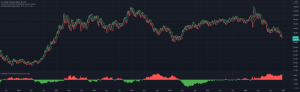
- Technical analysis involves studying historical market data, such as price charts and trading volume, to identify patterns and trends that can help predict future market movements.
- Chart patterns: Technical analysts use chart patterns, such as head and shoulders, double tops, and triangles, to predict potential price movements based on historical patterns.
- Indicators: Technical analysts also utilize indicators, such as moving averages, relative strength index (RSI), and MACD, to assess market momentum and identify potential entry and exit points.
Interpreting Market Data and News
- Stay informed: Keep up-to-date with market news and economic events to understand how external factors may impact market volatility.
- Avoid emotional decisions: During periods of market volatility, it’s essential to remain rational and avoid making impulsive decisions based on fear or greed.
- Consult experts: Seek advice from financial advisors or market analysts to gain different perspectives and insights on market conditions.
In conclusion, mastering Strategies for Dealing with Market Volatility is crucial for any investor looking to weather the storms of market fluctuations. By implementing these techniques and staying informed, you can navigate through volatile times with resilience and success.
FAQ Corner
How can diversification help in dealing with market volatility?
Diversification involves spreading investments across different assets to reduce risk exposure to a single asset class, thus helping to mitigate losses during volatile market conditions.
What is the significance of setting stop-loss orders during volatile market periods?
Setting stop-loss orders can help limit potential losses by automatically selling an asset when it reaches a predetermined price level, protecting investors from further declines.
How does dollar-cost averaging work in mitigating the effects of market volatility?
Dollar-cost averaging involves investing a fixed amount at regular intervals regardless of market conditions, which can help average out the purchase price over time and reduce the impact of short-term market fluctuations.
Why is it important to stay invested for the long term during volatile market conditions?
Staying invested for the long term allows investors to ride out market fluctuations and benefit from the long-term growth potential of their investments, minimizing the impact of short-term market volatility.