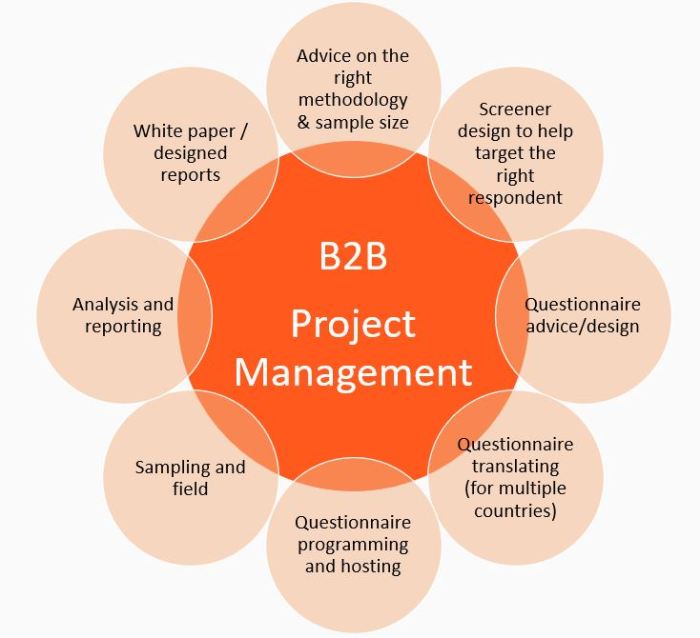
Embark on a journey into the world of B2B Market Research, where valuable insights drive business success. Explore the essential aspects of this crucial field that shapes strategic decisions and fosters growth.
Delve deeper into the methodologies, market analysis, volatility impact, and emerging trends that define the landscape of B2B Market Research.
Introduction to B2B Market Research
B2B market research refers to the process of gathering, analyzing, and interpreting data related to businesses and their markets. It involves studying the behavior, needs, and preferences of other businesses in order to make informed decisions.
Business-to-business market research is crucial for companies looking to understand their target audience, competition, and industry trends. By conducting thorough research, businesses can identify opportunities for growth, develop effective marketing strategies, and stay ahead of the competition.
Industries That Heavily Rely on B2B Market Research
- Technology: Companies in the tech industry rely on B2B market research to understand the latest trends, demand for new products, and competitive landscape.
- Manufacturing: Manufacturers use market research to identify potential customers, optimize their supply chain, and improve product development processes.
- Healthcare: In the healthcare sector, B2B market research helps companies understand the needs of healthcare providers, patients, and regulatory requirements.
- Finance: Financial institutions conduct market research to analyze market trends, customer preferences, and investment opportunities.
Methods of Conducting B2B Market Research
B2B market research involves various methodologies to gather valuable insights into business-to-business interactions. One key aspect is the collection of primary data, which allows for a deeper understanding of market dynamics and customer preferences.
Primary Data Collection in B2B Market Research
Primary data collection is essential in B2B market research as it involves gathering information directly from businesses, rather than relying on existing data or secondary sources. This method enables researchers to obtain specific and up-to-date information that is crucial for making informed decisions in the B2B sector.
- Conducting surveys and questionnaires among businesses to gather feedback and opinions.
- Interviewing key stakeholders within organizations to understand their needs and challenges.
- Observing business interactions and transactions to identify patterns and trends.
Qualitative vs. Quantitative Research Methods in B2B Market Research
In B2B market research, both qualitative and quantitative methods play important roles in gaining insights into the market landscape.
Qualitative Research
Qualitative research focuses on exploring in-depth insights, opinions, and motivations behind business decisions. It involves techniques such as interviews, focus groups, and case studies to understand the ‘why’ behind certain behaviors.
Qualitative research is valuable for uncovering underlying reasons and motivations that drive B2B purchasing decisions.
Quantitative Research
Quantitative research, on the other hand, involves the use of statistical data and numerical analysis to quantify trends, behaviors, and patterns in the B2B market. Surveys, data analysis, and experiments are common methods used in quantitative research.
Quantitative research provides measurable data that can be used to make data-driven decisions in the B2B sector.
Market Analysis in B2B Research
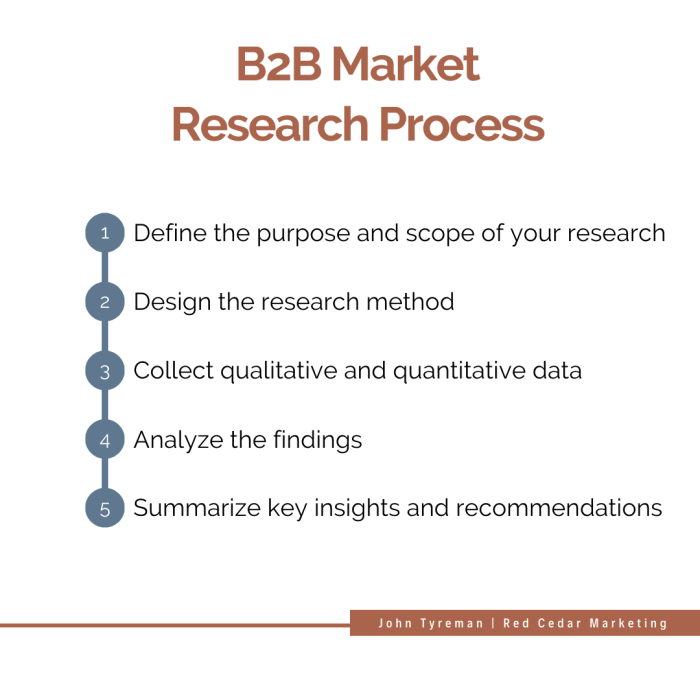
Market analysis plays a crucial role in B2B research by providing valuable insights into the dynamics of the market, competitors, and customer behavior. It helps businesses understand the factors influencing their industry and make informed decisions to stay competitive and drive growth.
Tools and Techniques for Market Analysis in B2B Research
Market analysis in B2B research involves various tools and techniques to gather, analyze, and interpret data effectively. Some examples include:
- SWOT Analysis: Identifying strengths, weaknesses, opportunities, and threats to assess the business’s internal and external environment.
- Competitive Analysis: Evaluating competitors’ strategies, products, and market positioning to identify areas for improvement.
- Market Segmentation: Dividing the market into distinct groups based on demographics, behaviors, or needs to tailor marketing strategies.
- Trend Analysis: Monitoring market trends, such as technological advancements or consumer preferences, to anticipate changes and adapt accordingly.
Role of Market Analysis in Making Informed Decisions
Market analysis helps businesses make informed decisions by providing them with a comprehensive understanding of the market landscape. It enables companies to:
- Identify Opportunities: By analyzing market trends and competitors, businesses can identify new opportunities for growth and expansion.
- Minimize Risks: Understanding market dynamics allows businesses to anticipate potential risks and challenges, enabling them to mitigate them effectively.
- Optimize Marketing Strategies: By segmenting the market and analyzing customer behavior, businesses can tailor their marketing strategies to target specific audiences effectively.
- Improve Decision-Making: Data-driven market analysis provides businesses with valuable insights that enable them to make strategic decisions based on facts rather than assumptions.
Market Volatility and its Impact on B2B Research
Market volatility can significantly impact B2B businesses, affecting their decision-making processes, financial stability, and overall performance. In volatile markets, businesses may struggle to predict consumer demand, anticipate competitor actions, or adjust pricing strategies effectively. This uncertainty can make it challenging for B2B companies to plan for the future, allocate resources efficiently, and maintain a competitive edge.
Strategies for Conducting B2B Market Research in Volatile Markets
- Regular Monitoring: Stay informed about market trends, competitor activities, and customer preferences through continuous monitoring and analysis.
- Flexibility: Be prepared to adjust research methodologies, timelines, and objectives to adapt to changing market conditions quickly.
- Diversification: Explore multiple data sources, research techniques, and analytical tools to mitigate risks associated with market fluctuations.
- Scenario Planning: Develop alternative scenarios and contingency plans to address potential outcomes of market volatility and minimize negative impacts.
Examples of Industries Facing Significant Market Volatility
- Technology Sector: Rapid advancements and disruptive innovations can lead to frequent market fluctuations, requiring tech companies to conduct agile and adaptive market research.
- Financial Services: Economic uncertainties, regulatory changes, and global events can create volatility in financial markets, prompting banks and financial institutions to conduct thorough risk assessments and market analyses.
- Commodity Markets: Price fluctuations, supply chain disruptions, and geopolitical factors can contribute to volatility in commodity markets, necessitating in-depth market research and strategic planning for commodity trading companies.
Emerging Trends in B2B Market Research
In today’s rapidly evolving business landscape, several trends are reshaping the way B2B market research is conducted. These trends are driven by advancements in technology and the increasing importance of data-driven decision-making processes.
Impact of Technology on B2B Research Methodologies
Technology has revolutionized the way B2B market research is carried out. The use of big data analytics tools allows businesses to gather and analyze vast amounts of data quickly and efficiently. This enables them to gain valuable insights into market trends, consumer behavior, and competitor strategies. Additionally, advancements in artificial intelligence (AI) have automated many aspects of market research, making processes more streamlined and cost-effective.
Role of Data Analytics and AI in Transforming B2B Market Research Practices
Data analytics and AI play a crucial role in transforming B2B market research practices. With the help of predictive analytics, businesses can forecast market trends and customer preferences with a high degree of accuracy. AI-powered tools can also provide personalized recommendations based on individual customer data, enhancing the overall customer experience. Moreover, machine learning algorithms can sift through vast amounts of data to identify patterns and insights that would be impossible to uncover manually.
In conclusion, B2B Market Research emerges as a cornerstone for informed decision-making and adaptation in dynamic business environments. Stay ahead of the curve by leveraging the latest trends and insights unveiled through meticulous research practices.
Commonly Asked Questions
How can B2B market research benefit businesses?
B2B market research provides valuable insights into market trends, customer preferences, and competitor strategies, enabling businesses to make informed decisions and stay competitive.
What are the key differences between qualitative and quantitative research methods in the B2B context?
Qualitative research focuses on gathering in-depth insights through open-ended questions and observations, while quantitative research involves numerical data analysis to draw statistical conclusions.
How does market analysis support B2B research?
Market analysis helps businesses understand market dynamics, identify opportunities, and assess risks, guiding strategic decision-making and resource allocation.