Beginning with Oil and gas market analysis, the narrative unfolds in a compelling and distinctive manner, drawing readers into a story that promises to be both engaging and uniquely memorable.
The oil and gas market is a dynamic industry influenced by various factors, with companies constantly seeking ways to navigate through challenges and capitalize on opportunities. This analysis delves into the intricacies of this sector, shedding light on key trends, market research techniques, and strategies for success.
Overview of the Oil and Gas Market
The oil and gas market plays a crucial role in the global economy, with its products being essential for various industries and everyday life. Let’s delve into the current landscape of this market, exploring the key factors influencing it, recent trends, and major players in the industry.
Current Landscape of the Oil and Gas Market
The oil and gas market is constantly evolving, influenced by factors such as supply and demand dynamics, geopolitical tensions, technological advancements, and environmental regulations. Despite the shift towards renewable energy sources, oil and gas still dominate the energy mix, driving the market’s growth and shaping its landscape.
Key Factors Influencing the Oil and Gas Market
Global demand for energy
The increasing energy needs of emerging economies and population growth drive the demand for oil and gas.
Geopolitical events
Political instability, conflicts, and sanctions in oil-producing regions can disrupt supply and affect prices.
Technological innovations
Advances in drilling techniques, extraction methods, and renewable energy technologies impact the market.
Environmental concerns
Growing awareness of climate change and the push for sustainable practices are shaping the industry’s future.
Recent Trends in the Oil and Gas Market
Shift towards cleaner energy
Companies are investing in renewables and reducing carbon emissions to align with climate goals.
Price volatility
Fluctuations in oil prices due to global events, supply-demand imbalances, and economic factors impact the market.
Digital transformation
Adoption of digital technologies like AI, IoT, and data analytics is optimizing operations and improving efficiency.
Energy transition
The transition towards a low-carbon economy is prompting oil and gas companies to diversify and adapt their business models.
Major Players in the Industry
The oil and gas market is dominated by major multinational corporations such as ExxonMobil, Shell, BP, Chevron, and Total. These companies have a global presence, extensive operations, and significant investments in exploration, production, refining, and distribution of oil and gas products.
Market Analysis Techniques
Market analysis techniques play a crucial role in helping companies in the oil and gas sector make informed decisions. By utilizing various methods, businesses can gather valuable insights into market trends, competitor activities, and consumer behavior. Let’s explore some of the key techniques used in oil and gas market analysis.
Quantitative Market Analysis
Quantitative market analysis involves the use of numerical data to analyze market trends, performance, and forecasts. This approach relies on statistical models and mathematical calculations to assess factors such as demand, supply, pricing, and market share. Examples of tools used for quantitative market analysis in the oil and gas sector include:
- Statistical software such as SPSS or SAS for data analysis
- Econometric models for forecasting oil and gas prices
- Financial ratios to evaluate the financial health of companies in the industry
Qualitative Market Analysis
Qualitative market analysis involves a more subjective assessment of market dynamics, focusing on factors such as consumer preferences, industry trends, and regulatory changes. This approach relies on expert opinions, market research, and industry reports to provide insights into market conditions. Examples of tools used for qualitative market analysis in the oil and gas sector include:
- SWOT analysis to identify strengths, weaknesses, opportunities, and threats
- PESTEL analysis to evaluate political, economic, social, technological, environmental, and legal factors
- Competitive analysis to assess the strengths and weaknesses of competitors
Decision-making Benefits
Market analysis helps companies in the oil and gas sector make strategic decisions by providing valuable information and insights. By analyzing market trends, competitive landscapes, and consumer behavior, companies can:
- Identify new opportunities for growth and expansion
- Develop effective marketing strategies to target specific customer segments
- Anticipate market changes and adjust business operations accordingly
Market Research in the Oil and Gas Industry
Market research plays a crucial role in the oil and gas sector, providing valuable insights that help companies make informed decisions and stay competitive in the market. By analyzing industry trends, consumer behavior, and market dynamics, companies can identify opportunities for growth and mitigate potential risks.
Key Components of Conducting Market Research
- Analysis of Supply and Demand: Understanding the current and future demand for oil and gas products is essential for planning production and distribution strategies.
- Competitor Analysis: Evaluating the strategies and performance of competitors helps companies identify their strengths and weaknesses in comparison.
- Regulatory Environment Assessment: Keeping abreast of regulatory changes and compliance requirements is crucial for navigating the complex legal landscape in the industry.
- Market Segmentation: Dividing the market into segments based on factors like geography, product type, and consumer behavior helps companies tailor their offerings to specific customer needs.
Successful Market Research Strategies in Oil and Gas
- Utilizing Big Data Analytics: Leveraging advanced analytics tools to process large volumes of data helps companies gain deeper insights into market trends and consumer preferences.
- Engaging with Stakeholders: Collaborating with industry experts, government agencies, and local communities allows companies to gather diverse perspectives and enhance their market research efforts.
- Investing in Technology: Adopting innovative technologies such as AI, IoT, and blockchain can streamline data collection and analysis processes, leading to more accurate market research outcomes.
Identifying Opportunities and Threats through Market Research
-
Market research helps companies identify emerging trends, new market segments, and untapped opportunities for expansion.
-
By analyzing market data and competitor strategies, companies can anticipate potential threats such as price wars, supply chain disruptions, and regulatory challenges.
-
Understanding customer preferences and behavior through market research enables companies to tailor their products and services to meet evolving demands, reducing the risk of losing market share.
Market Volatility in the Oil and Gas Sector
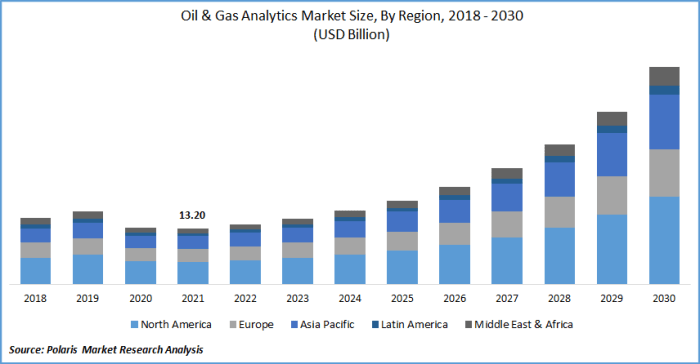
Market volatility in the oil and gas industry is a common phenomenon that can be influenced by various factors. This volatility can have significant impacts on companies operating in this sector, as well as on investment decisions made by stakeholders.Market volatility in the oil and gas sector can be attributed to several reasons, including geopolitical events, supply and demand dynamics, economic conditions, regulatory changes, and technological advancements.
These factors can lead to fluctuations in oil and gas prices, which in turn affect the overall market stability.
Historical Examples of Market Volatility
- During the oil price collapse in 2014, crude oil prices plummeted from over $100 per barrel to below $30 per barrel, leading to widespread industry layoffs and project cancellations.
- The Gulf War in the early 1990s caused a spike in oil prices due to supply disruptions, impacting global markets and economies.
Strategies to Mitigate Risks
- Diversification of assets across different regions and sectors to reduce exposure to market fluctuations.
- Implementing hedging strategies to lock in prices and protect against downside risks.
- Maintaining a strong balance sheet with sufficient liquidity to withstand volatile market conditions.
Impact on Investment Decisions
- Market volatility can make it challenging for investors to predict future returns, leading to cautious investment decisions.
- Uncertainty in oil and gas prices can deter long-term investments in new projects and exploration activities.
In conclusion, understanding the nuances of the oil and gas market is crucial for companies looking to thrive in this competitive landscape. By leveraging effective market analysis techniques and staying informed about market volatility, organizations can make informed decisions that drive growth and sustainability.
Top FAQs
How does market analysis impact decision-making in the oil and gas sector?
Market analysis provides valuable insights into market trends, competitor strategies, and customer preferences, enabling companies to make informed decisions that drive growth and profitability.
What are some common tools used for market analysis in the oil and gas industry?
Some common tools include SWOT analysis, Porter’s Five Forces, and scenario planning, which help companies assess market dynamics and make strategic decisions.
Why is market research important for companies operating in the oil and gas sector?
Market research helps companies understand customer needs, evaluate market opportunities, and identify potential risks, leading to more effective decision-making and sustainable growth.
How do companies mitigate risks associated with market volatility in the oil and gas industry?
Companies often use hedging strategies, diversification of assets, and long-term contracts to mitigate risks associated with market volatility and ensure financial stability.