Global Market Analysis Trends sets the stage for this enthralling narrative, offering readers a glimpse into a story that is rich in detail with casual formal language style and brimming with originality from the outset.
As we delve into the depths of market analysis trends, we uncover a world of strategic decisions, impactful events, and emerging technologies that shape the global marketplace.
Introduction to Global Market Analysis Trends
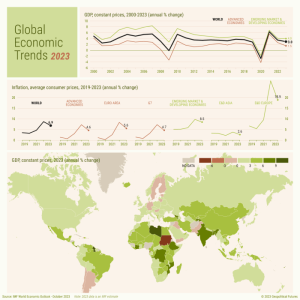
Analyzing global market trends is crucial for businesses to stay competitive and adapt to the ever-changing economic landscape. By studying market trends, companies can anticipate shifts in consumer preferences, industry developments, and economic conditions, allowing them to make informed strategic decisions.
Impact of Global Events on Market Trends
Global events such as political upheavals, natural disasters, and pandemics can have a significant impact on market trends. These events can disrupt supply chains, affect consumer behavior, and create volatility in financial markets, leading to fluctuations in demand and pricing.
Market Research Methods
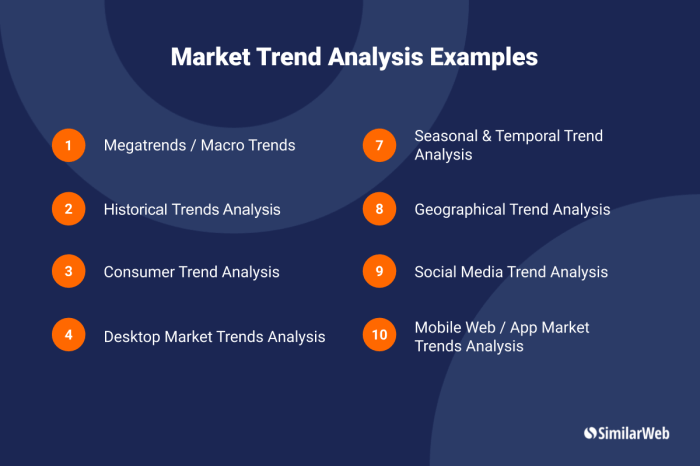
Market research is a crucial aspect of understanding market trends and consumer behavior. Different methodologies are used to gather data and insights to make informed business decisions.
Qualitative vs Quantitative Research
Qualitative research focuses on gathering non-numerical data, such as opinions, motivations, and attitudes. This method involves techniques like interviews, focus groups, and observations. On the other hand, quantitative research deals with numerical data and statistical analysis. Surveys, questionnaires, and experiments are common tools used in quantitative research.
Primary and Secondary Data
Primary data is collected firsthand by the researcher through methods like surveys, interviews, or observations. It provides unique and specific information tailored to the research objectives. Secondary data, on the other hand, is gathered from existing sources like reports, articles, and databases. It offers a broader perspective and can complement primary data findings.
Factors Influencing Market Volatility
Market volatility is influenced by various factors that can lead to fluctuations in prices and trading activity. Understanding these key factors is essential for investors and analysts to make informed decisions in the financial markets.Geopolitical events play a significant role in driving market volatility. Events such as wars, political instability, trade tensions, and natural disasters can create uncertainty and impact investor confidence.
For example, the escalation of conflict in a region can lead to a spike in oil prices, affecting energy stocks and overall market performance.Investor sentiment is another crucial factor that influences market fluctuations. The emotions and perceptions of market participants can drive buying or selling decisions, leading to rapid price changes. Positive sentiment can fuel market rallies, while negative sentiment can trigger sell-offs and downturns.
It is important to monitor investor sentiment indicators to gauge market direction.
Geopolitical Events
Geopolitical events, such as Brexit, the US-China trade war, and political unrest in key regions, can have a significant impact on market volatility. These events create uncertainty and can lead to sudden shifts in market sentiment, affecting asset prices and trading volumes.
- Trade tensions between major economies can disrupt global supply chains and impact corporate earnings.
- Political instability in key regions can lead to increased risk aversion among investors, causing capital flight from emerging markets.
- Natural disasters, such as hurricanes or earthquakes, can disrupt economic activities and damage infrastructure, leading to market turmoil.
It is crucial for investors to stay informed about geopolitical events and their potential impact on the financial markets to manage risks effectively.
Investor Sentiment
Investor sentiment refers to the collective feelings and attitudes of market participants towards the financial markets. Positive sentiment can drive buying activity and push prices higher, while negative sentiment can lead to selling pressure and price declines.
- Fear and Greed Index: This index measures investor sentiment based on factors such as market volatility, trading volumes, and put/call ratios.
- Sentiment Surveys: Surveys conducted among investors and analysts provide insights into market sentiment and future market direction.
- Media Sentiment: News headlines and social media posts can influence investor sentiment and market behavior, impacting trading decisions.
Monitoring investor sentiment indicators can help investors anticipate market trends and make informed decisions based on market psychology.
Emerging Trends in Market Analysis
AI and Machine Learning in Market AnalysisThe use of Artificial Intelligence (AI) and machine learning has revolutionized market analysis by enabling the processing of vast amounts of data at unprecedented speeds. These technologies can identify patterns, trends, and correlations that may not be immediately apparent to human analysts. As a result, AI and machine learning are increasingly being used to make more accurate predictions and informed decisions in the financial markets.Growing Importance of ESG Factors in Investment DecisionsEnvironmental, Social, and Governance (ESG) factors are becoming key considerations for investors when making investment decisions.
Companies that demonstrate strong ESG practices are seen as more sustainable and better equipped to weather economic uncertainties. As a result, investors are increasingly incorporating ESG criteria into their decision-making processes to align their investments with their values and long-term goals.Impact of Digital Transformation on Market Research PracticesThe digital transformation has significantly impacted market research practices by providing access to real-time data, advanced analytics tools, and online platforms for data collection.
This has enabled market researchers to gather insights more quickly, efficiently, and accurately than ever before. As a result, traditional market research methods are being supplemented or replaced by digital tools and techniques to adapt to the rapidly changing business landscape.
In conclusion, Global Market Analysis Trends presents a tapestry of insights, highlighting the dynamic nature of market trends and the evolving landscape of business decisions in a rapidly changing world.
FAQ Explained
What role does AI play in market analysis?
AI aids in processing vast amounts of data to identify patterns and trends, enhancing market analysis efficiency.
How do ESG factors impact investment decisions?
ESG factors (Environmental, Social, and Governance) are increasingly considered in investment decisions to evaluate sustainability and ethical practices of companies.